CAPTAIN COVE ADVENTURES
The Lantern in the Dunes
A Captain Cove Adventure
Told by Captain John Harlow
Now, gather close, young adventurers, because this tale began on a warm Panama City Beach evening when the Gulf was calm, the sand was silver, and one little light was shining where no light ought to be.
Captain Cove was walking along the beach, searching for whatever the tide had left behind. He had already discovered a lightning-whelk shell, three pieces of driftwood, and a crab who insisted that Captain Cove’s left boot looked like a perfectly good summer cottage.
“It is not available,” Captain Cove told him.
The crab clicked his claws. “Shame. Excellent sea view.”
Captain Cove laughed and continued toward the dunes.
That was when he saw it.
A pale golden light blinked between the sea oats.
Flash.
Darkness.
Flash-flash.
Darkness again.
Captain Cove stopped. His adventurous smile slowly appeared.
“There has to be a clue here somewhere.”
He climbed the wooden beach walkway for a better look. Sea oats whispered on both sides, their long roots holding the loose dune sand in place.
The strange light flashed again.
Flash.
Flash-flash.
Flash.
It did not move like a firefly. It did not sweep across the beach like a flashlight. It stayed in one place, blinking in an odd pattern.
Captain Cove hurried along the walkway until he reached an open patch of sand where someone had left a small blue ribbon tied around a piece of driftwood.
He examined it carefully.
“A marker,” he said. “But for what?”
A voice came from behind him.
“The brightest path is not always the truest one.”
Captain Cove spun around.
Sagey sat beneath a wide straw hat at the edge of the dunes. Moonlight reflected in his round glasses, making them look like two tiny silver oceans.
“Sagey!” Captain Cove exclaimed. “Were you sitting there the whole time?”
Sagey smiled.
“A question may arrive long after its answer.”
Captain Cove waited.
Sagey said nothing else.
“That clears up absolutely nothing,” Captain Cove muttered.
He pointed toward the blinking light. “Do you know what that is?”
Sagey gazed across the dunes.
“The smallest sailors wait beneath the sand for a night with two horizons. One horizon leads home. The other has never touched the sea.”
Before Captain Cove could ask what that meant, a familiar voice called from the walkway.
“Captain! I observed your rapid change in direction and concluded that either you had discovered a mystery or misplaced your supper.”
Professor Tide approached carrying his field notebook and a small instrument with a glass dial.
“A mystery,” Captain Cove replied. “Although I may also have misplaced my supper.”
Professor Tide adjusted his spectacles and studied the light.
“Artificial illumination,” he announced. “Approximately forty paces inland. The blinking appears irregular.”
“Someone may have dropped a lantern,” said Captain Cove.
“A reasonable hypothesis.”
Captain Cove stepped toward the dune.
He could travel across sand as well as any turtle on the coast, but he did not charge ahead. His eyes moved over every hollow and ripple.
Professor Tide noticed.
“You see them too,” he said.
Captain Cove nodded.
Several shallow dips rested beneath the sea oats. They might have been ordinary hollows made by the wind—or they might have marked sea turtle nests hidden deep below the surface.
Tiny ghost-crab burrows dotted the slope. Farther up the dune, a shorebird sat almost perfectly still beside a clump of grass.
“We can cross the dunes,” Captain Cove said quietly, “but we cannot be sure where it is safe to step.”
“Precisely,” said Professor Tide. “Sea oats also help keep the dunes from blowing away. Damaging their roots could weaken the entire slope.”
Captain Cove studied the glowing lantern. It was not far away, but there was no clear path to it.
“We need to reach that light without trampling anything we cannot see.”
Sagey tilted his head.
“A rescue that destroys what it cannot see has merely taught danger to wear a kinder face.”
Captain Cove blinked.
“I think I almost understood that one.”
A soft splash sounded behind them.
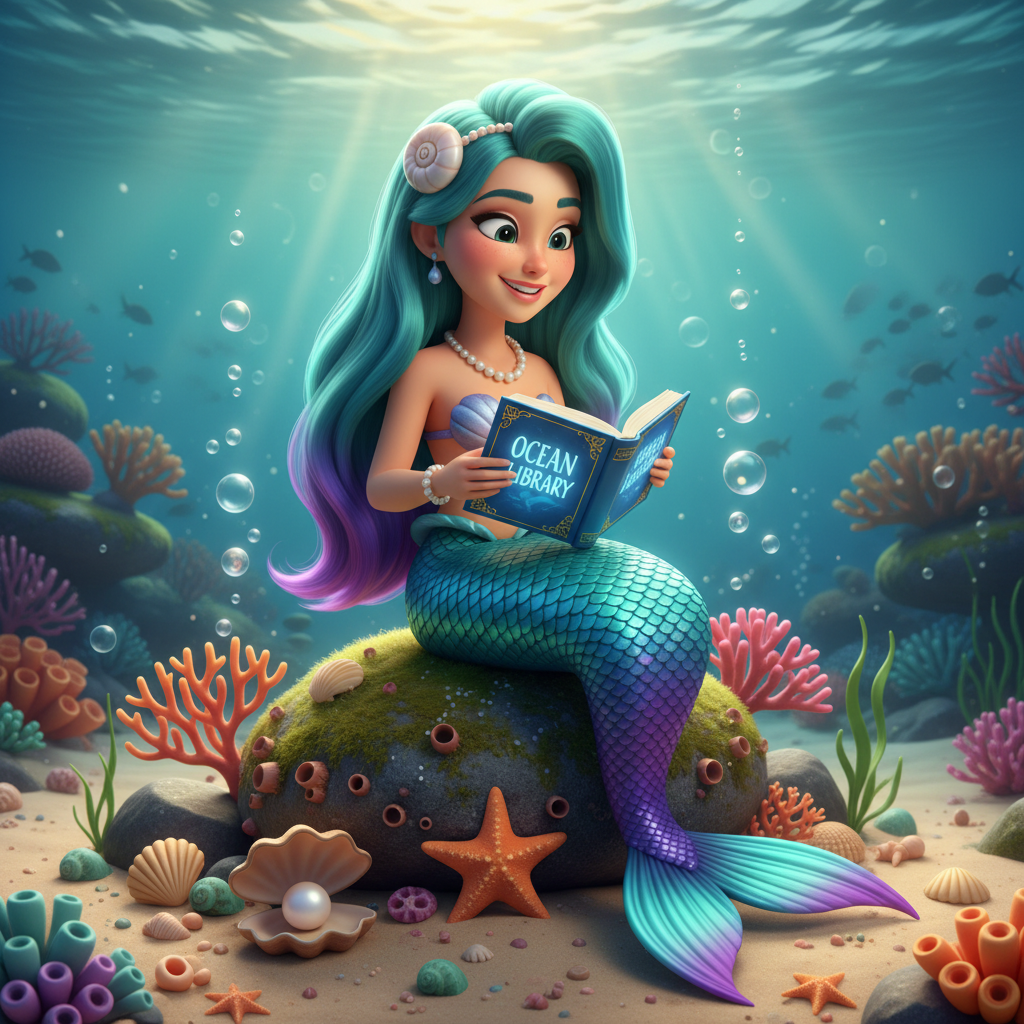
Marina Pearl rose from the shallow Gulf water, her turquoise-and-purple tail sparkling beneath the moon.
“Captain!” she called. “Something is happening near the tide line.”
She pointed down the beach.
Small marks had appeared in the sand. They formed several wobbly trails leading from the dunes.
Captain Cove’s heart jumped.
He knew those tracks.
“Hatchlings.”
Tiny sea turtles were emerging from a nest beneath the sand. One after another, they pushed free and began crawling toward the brightest glow they could see.
But they were not heading toward the Gulf.
They were turning toward the blinking lantern.
Captain Cove remembered his own first journey across a nighttime beach—the cool sand beneath him, the open sky above, and the Gulf shining ahead. A hatchling’s path should lead toward the wide, bright horizon over the water.
This light was leading them the wrong way.
“That is what Sagey meant by two horizons,” Captain Cove said. “The Gulf is the true one. The lantern is the false one.”
Marina knelt near the water, her voice gentle but worried.
“They are tired already. We have to help them find the sea.”
Professor Tide opened his notebook.
“Hatchlings naturally move toward the brightest open horizon. Artificial lights can confuse them, causing them to crawl inland.”
“We don’t need to move the hatchlings,” Captain Cove said. “We need to take away the false horizon.”
He looked at the lantern, then at the fragile sand between them and it.
There had to be another way.
Captain Cove searched the beach. His eyes landed on a long piece of driftwood lying near the tide line. A length of rope was tangled around it.
His smile returned.
“Professor, how are you at throwing a rope?”
Professor Tide straightened his bow tie.
“I once calculated the perfect arc for tossing a life ring from a moving boat.”
“Is that a yes?”
“It is an extremely confident yes.”
Captain Cove untangled the rope and tied one end around the top of the driftwood. Then he removed his large pirate hat.
“My hat?” he said, looking at it sadly. “Why is it always my hat?”
“Because it is enormous,” said Professor Tide.
Captain Cove fastened the hat to the end of the rope. He planted the driftwood upright in the sand like the mast of a tiny ship.
The plan was simple—at least, it sounded simple.
Professor Tide would toss the hat beyond the lantern. Captain Cove and Marina would pull the rope, dragging the hat gently over the light without anyone stepping across the nesting area.
Professor Tide swung the rope.
“Trajectory ready.”
He threw.
The hat sailed through the moonlight, turned sideways, and landed on a bush.
A small lizard poked its head out from beneath it.
“My apologies,” said Professor Tide.
They tried again.
This time the hat landed beyond the lantern.
“Pull!” cried Captain Cove.
He and Marina tugged the rope. The hat slid across the sand, bumped over a tiny ridge, and dropped neatly on top of the blinking light.
The golden glow vanished.
For one breathless moment, the beach was dark.
Then moonlight shimmered across the Gulf.
The hatchlings stopped.
One turned.
Then another.
Soon every tiny turtle was crawling toward the water.
“They see the true horizon,” Marina whispered.
Captain Cove, Professor Tide, Marina, and Sagey watched from a safe distance as the little sailors crossed the wet sand.
A wave washed forward and carried the first hatchling into the Gulf. Then the second disappeared into the silver water. Soon only one remained.
The smallest hatchling paused at the edge of the sea.
Captain Cove leaned forward.
“Go on, little sailor,” he said softly. “The sea is waiting.”
A gentle wave reached up the beach, curled around the hatchling, and swept it safely home.
Marina wiped a happy tear from her cheek.
Professor Tide made a note in his book.
Captain Cove stared at the place where the tiny turtle had vanished. He felt proud, relieved, and a little as though he had watched a piece of his own story begin again.
Much later, after the nesting area had been carefully checked, they retrieved the lantern. It was an old camping lantern with a broken switch. Someone had left it behind, and the evening breeze had caused its loose cover to blink open and closed.
“So there was no secret message,” Captain Cove said.
“Not every pattern is a message,” Professor Tide replied. “Sometimes it is simply a malfunction.”
Sagey smiled.
“And sometimes the message is not in the light, but in those who choose not to follow it.”
Captain Cove looked at him.
“Do you practice saying things like that?”
Sagey adjusted his hat.
“The moon does not practice shining.”
Captain Cove sighed. “Of course it doesn’t.”
He tucked the broken lantern beneath one arm and placed his pirate hat—now slightly sandy and occupied by the stubborn little lizard—back on his head.
Together, the friends followed the walkway home while the waves whispered behind them.
And if you ever find yourself on Panama City Beach after dark, remember this: the dunes may look quiet, but they can be filled with hidden life. Walk carefully, keep the beach dark near nesting places, and let the Gulf provide the brightest welcome.
Because, as Captain Cove learned that night, some mysteries are solved by finding a light.
Others are solved by knowing which light must be covered.
And that, my young shipmates, is the tale of the lantern in the dunes.